What a Garage Door Replacement in LA Involves

What a Garage Door Replacement in LA Involves

Garage Door Springs Hold Dangerous Tension

The springs that balance a garage door store significant energy under tension, enough to cause serious injury if released improperly. Removing an old door and installing a new one both involve handling that tension safely, which is a leading reason garage door replacement is work for trained technicians, not a weekend project.

Proper Measurement Prevents Install Problems

A correct replacement starts with accurate measurement of the opening, the headroom, the side room, and the backroom. Getting these wrong leads to a door that binds or does not fit, which is why professional installation begins with measuring rather than ordering.

The Opener Reverses as a Safety Requirement

A newly installed residential opener is set so the door reverses on contact within about two seconds, meeting federal rule 16 CFR Part 1211. Testing and setting that reversal is a required part of a safe installation, not an optional step.

Homeowners picturing a garage door replacement often imagine a simple swap: the old door comes down, the new one goes up, done by lunch. For a simple job that is close to the truth, but what happens in between is a sequence of steps that decide whether the new door operates safely and lasts. Understanding what a replacement in Los Angeles actually involves helps a homeowner know what they are paying for, why the installation matters as much as the door, and why it is not a project to attempt with a ladder and a weekend. The work runs from careful removal through matching the springs and opener to the new door and testing the safety before the door is handed over.

It Starts With Measurement

A replacement begins before the new door arrives, with accurate measurement of the opening. A correct fit depends on more than the width and height of the door; it depends on the headroom above the opening, the side room on each side, and the backroom depth into the garage, because those spaces determine the track configuration and whether a given door and opener will fit. Getting the measurements wrong leads to a door that binds, a track that does not clear an obstruction, or an opener that will not fit the headroom. This is why a professional replacement starts with measuring the specific opening rather than assuming a standard size, and it is one of the quiet steps that separates a smooth installation from a troubled one.

Measurement also reads the condition of the opening itself. The frame, the header, and the mounting surfaces have to be sound to carry the new door and hold the opener and the spring system. Where an older opening has rot, damage, or an out-of-square frame, that gets noted and addressed as part of the work, because a new door mounted to a compromised opening inherits the opening's problems. HeroTec reads the opening as part of the quote, so the flat-rate price reflects the actual job.

Removing the Old Door Safely

Taking down the old door is the step most homeowners underestimate, because of the springs. A garage door is balanced by springs that store significant energy under tension, enough to cause serious injury if they are released improperly. Removing an old door means safely relieving that spring tension, disconnecting the opener, and taking the door and its hardware down in a controlled way. This is the single clearest reason garage door replacement is not a do-it-yourself project. A homeowner working on a tensioned spring without the training and tools is risking a serious injury, and the videos that make it look simple leave out how wrong it can go. HeroTec handles the removal safely and hauls the old door and hardware away, so the homeowner is not left to dispose of it.
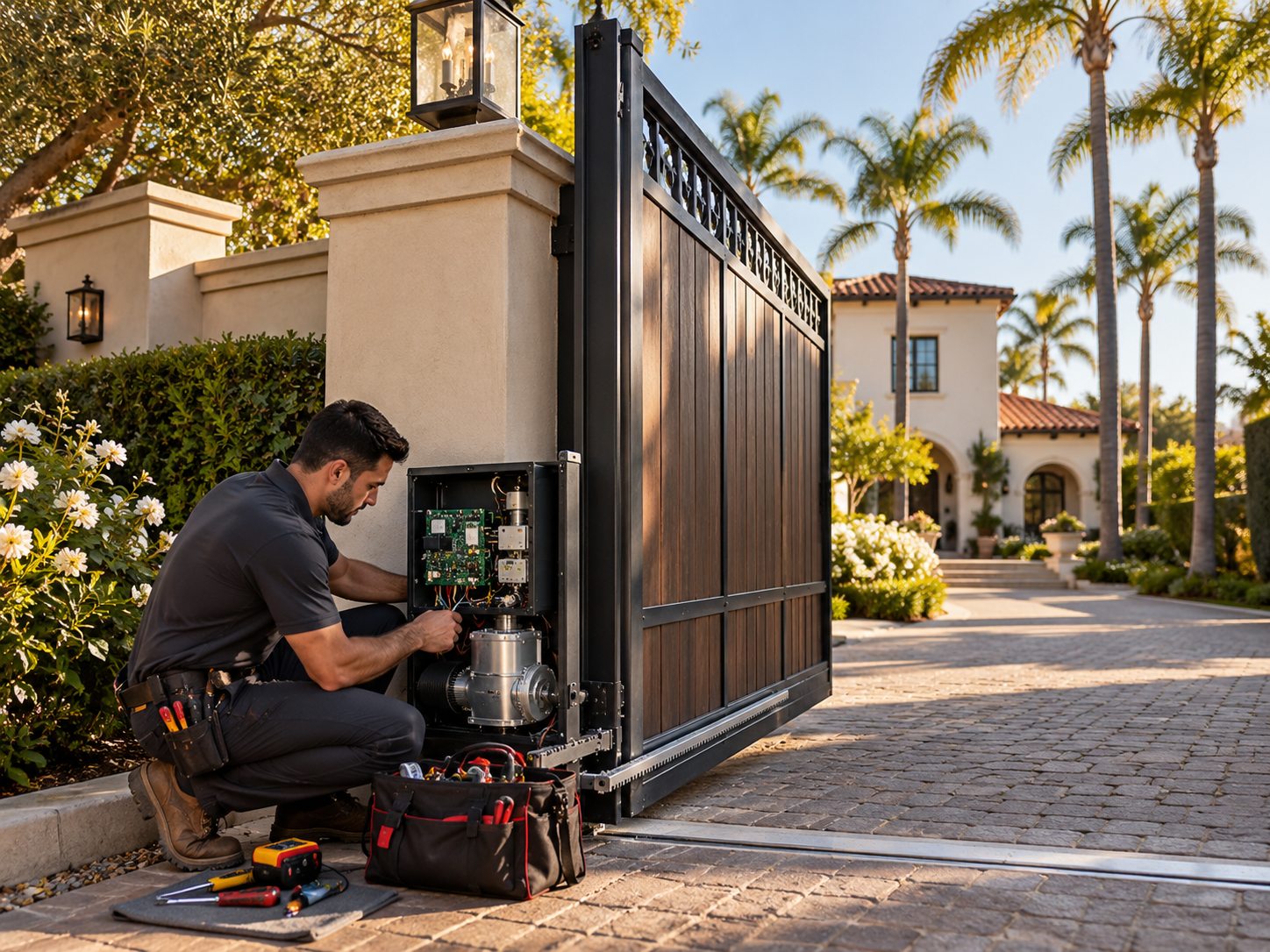
Careful removal also protects the opening and the surrounding structure. A door torn out carelessly can damage the frame, the header, or the garage wall, creating problems for the new installation. A controlled removal leaves a clean, sound opening ready for the new door, which is part of why the removal is done with the same care as the installation rather than rushed.

Matching the Springs to the New Door

The new door's weight sets the spring system, and matching the two correctly is one of the most important parts of the installation. The springs, not the opener, carry most of a garage door's weight; the opener mainly guides the balanced door up and down. If the springs are not sized to the door's weight, the door is unbalanced, which makes the opener work far harder, wears the whole system fast, and can make the door dangerous to operate manually. A heavier insulated door needs stronger springs than a single-layer one, so a replacement is not just hanging a new door on the old springs; it is sizing a spring system to the new door's weight and tensioning it correctly.

This is technical work with real safety stakes, since the springs are the tensioned components discussed above. Getting the spring sizing right is part of why a correct installation lasts and a careless one fails early. HeroTec sizes and installs the springs to the new door as part of the replacement, so the door is balanced, the opener is not overworked, and the system is set up to reach its service life rather than wear out ahead of it.
The Opener and the Safety Systems

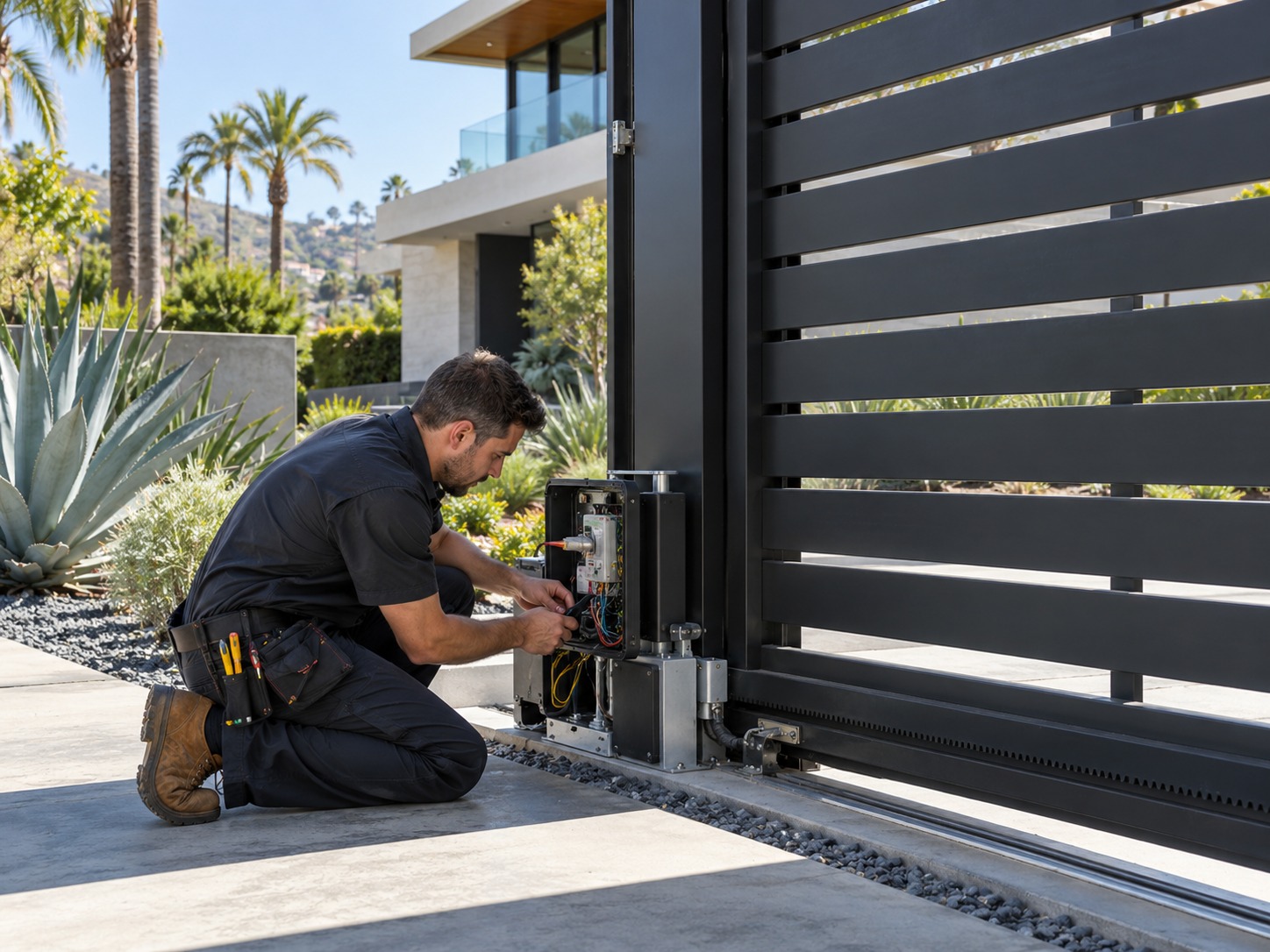
With the door hung and the springs set, the opener and the safety systems go in. If the opener is being replaced, which is often the right call, the new opener is matched to the door's weight, mounted, and set so its travel and force are correct for the door. The safety sensors, the photo-eyes near the floor that make the door reverse on an obstruction, are mounted and aligned. Then the critical safety test: the installer confirms the door reverses on contact within about two seconds, meeting federal rule 16 CFR Part 1211, and that the opener's battery backup functions, as California Senate Bill 969 requires. These are not optional checks; they are required parts of a safe installation.

Setting and testing the safety features is where a professional installation distinguishes itself. An opener installed without setting the auto-reverse correctly, or with the sensors misaligned, leaves a door that moves but is not safe, which is the hazard the federal rule exists to prevent. HeroTec, factory-certified on the major opener brands, sets and tests these systems as the final step, so the door handed to the homeowner is safe to use from the first cycle, not just functional.

The Walkthrough and the Warranty

A replacement closes with a walkthrough and the paperwork that stands behind the work. The installer runs the door through its cycle with the homeowner, confirms the safety features work, shows how the opener and its features operate, and leaves the installation clean. The work is done to code, with the Los Angeles Department of Building and Safety as the city's permit authority, and it carries a parts and labor warranty, so a problem traced to the installation is covered. The flat-rate quote given before the work is the price paid, with no hidden fees, and Get Now Pay Later financing can spread the cost over time where a homeowner prefers.
HeroTec adds a 48-hour follow-up after the work, a check-in that confirms the new door is operating as it should once it has been used for a day or two. That follow-through reflects how a boutique, family-run company founded by Avi approaches a job: the installation is not finished when the crew drives away but when the homeowner is using the door without a problem. For the largest moving part of a home, that standard is what a replacement should meet.

Planning a Garage Door Replacement in LA

Why a Professional Installation Pays Off

It is tempting to see a garage door replacement as a job a handy homeowner could tackle, and it is exactly the job that most rewards a professional. The springs hold enough tension to cause a serious injury if mishandled, the door is heavy and awkward, the measurements have to be right, and the safety systems have to be set and tested correctly. A mistake at any of these points is not a cosmetic flaw; it is a door that fails early, operates unsafely, or injures someone during the work. The money saved by attempting a replacement without the training and tools is small against the risk, which is why the replacement is handled by technicians who do it regularly rather than for the first time.

A professional installation also protects the value of the new door. A quality door installed with mismatched springs, misaligned tracks, or an unset opener fails to deliver the life and the smooth operation it was built for, so a poor installation wastes the door. A correct one lets the door reach its full service life, operate quietly and safely, and hold the warranty that depends on proper installation. For an investment a homeowner will live with for decades, the installation is not the place to cut a corner, and a licensed contractor who stands behind the work with a parts and labor warranty is what makes the investment sound.

Residential and Commercial Replacements

Garage door replacement is more than a residential job, and the range of doors a property might need is wide. HeroTec replaces residential doors and commercial ones, from the sectional steel doors common on homes and light commercial buildings to rolling steel doors, insulated commercial panels, fire-rated doors, and wind-rated doors on commercial properties. The openers range from the trolley openers typical on residential doors to the jackshaft openers used where headroom is limited or a commercial door demands it. Matching the door and the opener to the building, residential or commercial, is part of what a replacement involves, and it is where a contractor who works across both brings an advantage over one that handles only homes.

For a commercial property, the replacement carries the same discipline with higher stakes, since the door is part of the operation and often larger and heavier. The measurement, the safe removal, the spring and opener matching, and the safety testing all scale up, and the standards the door is built to, including the DASMA specifications for commercial doors, shape the installation. HeroTec's factory certification on the major brands and its welding and fabrication capability let it handle a commercial replacement to the standard the door and the business require, with the same flat-rate pricing and warranty that back its residential work.

The reason a garage door replacement is worth doing properly comes down to what the door is: the largest moving part of the home, used every day, held under tension that can injure, and relied on for security and safety. A replacement handled as a careful sequence, measured, removed safely, matched, and tested, delivers a door that serves that role for decades. One rushed or attempted without the training risks the door, the home, and the people in it.

For a Los Angeles homeowner planning the work, the value of understanding the sequence is knowing what a fair quote should cover and what a sound installation should include. A quote that accounts for the removal, the spring and opener matching, the safety testing, and the haul-away, from a licensed contractor who warranties the work, describes a complete job. One that lists only a door and a price leaves the parts that matter undefined, which is exactly where a replacement goes wrong. Knowing the steps lets a homeowner tell the two apart before the work begins.

Timing is the last piece a homeowner controls. A door replaced on a planned schedule, before the old one fails outright, is a calmer project than one rushed after a spring breaks and traps a car in the garage. Reading the signs that a door is near the end, and planning the replacement before the failure, lets a homeowner choose the door, schedule the work, and budget the cost without the pressure of an emergency. The replacement done ahead of the failure is the one that goes smoothly from measurement to walkthrough.

A garage door replacement is a sequence of careful steps, measurement, safe removal, spring and opener matching, and safety testing, that together decide whether the new door is safe and lasting, which is why it is professional work rather than a weekend project. Homeowners across Los Angeles can reach HeroTec Inc. to have a replacement done start to finish, with flat-rate pricing, a code-correct installation, safety testing, and a parts and labor warranty. To plan a garage door replacement, call (747) 350-2192 or visit herotecinc.com/garage-door-replacement-la.


Canoga Park, Los Angeles is located in the Los Angeles metropolitan area
Canoga Park, Los Angeles
Canoga Park, Los Angeles (the Los Angeles metropolitan area)
Canoga Park, Los Angeles
The Platt Building, also known as The Victorian — a c. 1970s office building at 19725 Sherman Way, Canoga Park−Winnetka, photo taken in 2008
Canoga Park, Los Angeles is located in San Fernando Valley
Canoga Park, Los Angeles
Location within Los Angeles/San Fernando Valley

Coordinates: 34°12′04″N 118°35′50″W / 34.20111°N 118.59722°W / 34.20111; -118.59722Owensmouth1912Canoga Park1931Named forCanoga, New YorkArea


 • Land4.4 sq mi (11.3 km2)Elevation

797 ft (243 m)Population

 
 • Total

60,971Time zoneUTC−8 (PST) • Summer (DST)UTC−7 (PDT)ZIP Codes

91303, 91304, 91305, 91309

Area codes818, 747

Canoga Park is a neighborhood in the city of Los Angeles, California, located in the San Fernando Valley. Before the Mexican–American War, the neighborhood was part of a rancho, and after the American victory it was converted into wheat farms and then subdivided, with part of it named Owensmouth as a town founded in 1912. It was annexed by Los Angeles in 1917 and was renamed Canoga Park on March 1, 1931, after Canoga, New York.[2]

History

[edit]

Pre-American history

[edit]

The area of present-day Canoga Park was the homeland of Native Americans in the Tongva-Fernandeño and Chumash-Venturaño tribes, that lived in the Simi Hills and along to the tributaries of the Los Angeles River. They traded with the north Valley Tataviam-Fernandeño people. Native American civilizations inhabited the Valley for an estimated 8,000 years.[3][4] Their culture left the Burro Flats Painted Cave nearby.[5]

From 1797 to 1846, the area was part of Mission San Fernando Rey de España (Mission San Fernando). After the Mexican War of Independence from Spain the 'future Canoga Park' land became part of Rancho Ex-Mission San Fernando. In 1845, a land grant for the separate and historically rich Rancho El Escorpión was issued by Governor Pío Pico to three Chumash people, Odón Eusebia, his brother-in-law Urbano, and Urbano's son Mañuel.[6][7][8] It was located in the area west of Fallbrook Avenue and later called Platt Ranch.[9][10]

American history

[edit]

In 1863, the syndicate San Fernando Homestead Association led by Isaac Lankershim and Isaac Van Nuys purchased the southern half of the historic San Fernando Valley. They established seven wheat ranch operations and were the first to ship wheat to Europe from California. In 1869, Alfred Workman acquired the westernmost ranch, a 13,000 acres (50 km2) wheat farm in future Canoga Park (for more: See Landmarks section below).[11] Eucalyptus trees were introduced into the San Fernando Valley by Albert Workman, who imported seedlings from his native Australia and planted them on the Workman Ranch. In time, they spread through the Canoga Park area ranches, farms and beyond. It has been said that these trees are the parents of all eucalyptus trees in Southern California.[12][13]

The entire south San Fernando Valley, from Roscoe Boulevard south to the hills, with certain exceptions, were to be subdivided in anticipation of the Los Angeles aqueduct's completion in 1913. The purchasers of the land included Harry Chandler and Harrison Gray Otis of the Los Angeles Times, Moses Sherman (a Los Angeles Pacific Railroad streetcar line builder), and Hobart Johnstone Whitley, an all purpose real estate developer who, from a start in the Land Rush of 1889 in Oklahoma to platting out 140 towns, including Hollywood.

1920 Sherman Way in downtown Owensmouth, with Los Angeles Pacific Railroad lines visible at right

The area was originally named Owensmouth by Los Angeles Suburban Home Company by general manager Hobart Johnstone Whitley as a sales tactic in that the town would be the new mouth of the Owens River, after the Los Angeles Aqueduct would be completed the next year. The town was founded on March 30, 1912, and the Suburban Home Company contracted with the Janss Investment Company, to sell properties. A pre-development scheme brought Pacific Electric streetcars and an all purpose highway (Sherman Way) out all the way from Hollywood through Cahuenga Pass, through the previously subdivided Van Nuys (1911). Highlighting the "opening day barbecue" was the display of the "Owensmouth Baby", a racecar that could go up and down the paved Sherman Way at the incredible speed of 35 mph.

A sign for Canoga Park's old town center on Sherman Way

Owensmouth, as the junior San Fernando Valley city to Van Nuys, promoted itself with the "baby" motif—using storks in their advertisement. The "baby city" of the Valley remained a very small community.

The lack of an independent water supply made annexation to the City of Los Angeles inevitable, and on February 26, 1917, it joined with its larger neighbor. The name was changed to Canoga Park in 1931, thanks to the efforts of local civic leader Mary Logan Orcutt.[14] Eventually, the area's zoning was rural/agricultural and its industry was small farms involved in the production of fruits, vegetables, and melons, some livestock, horses, a movie/television studio, and a stunt location.[15]

The Canoga Park Airstrip occupied the area now known as "Warner Center" (as shown on the street map 1955 Thomas Guide).

Annual events

[edit]

Memorial Day Parade

[edit]

Canoga Park has hosted a Memorial Day Parade for over three decades. The parade is organized by local representatives from the Canoga Park Community Center and local business leaders. It pays tribute to fallen servicemen and women from all branches of the U.S. Armed Forces. A flyover by the Condor Squadron serves as the kickoff of the parade. A special ceremony for fallen heroes from Canoga Park High School, including those dating back to World War II is part of the opening presentation.[16] The parade route goes along Sherman Way.

Día de los Muertos Family Festival

[edit]

Founded in 2000, the festival celebrated its 25th anniversary in 2025. It is one of the biggest Day of the Dead celebrations in the San Fernando Valley.The festival spans eight city blocks along Sherman Way between Topanga Canyon Blvd. and Canoga Ave and is attended by thousands of people. The festival happens on the first Sunday of November every year. The day long event includes live music, altars, art, food, children's activities, a catrina contest and a classic car show featuring lowriders, motorcycles and low rider bicycles.[17]

Aerospace industry

[edit]
Aerojet Rocketdyne Division

In 1955, Rocketdyne, then a division of North American Aviation (NAA), moved into the area and built its main manufacturing facility in Canoga Park. The facility became a major employer along with the Atomics International and Santa Susana Field Laboratory (SSFL) divisions of NAA.[18] Other aerospace companies followed: including Thompson Ramo Wooldridge-TRW, Hughes Aircraft, Rockwell International, Boeing, and Teledyne. Small machine shops and other ancillary businesses also sprang up to service the aerospace industry. The Rocketdyne facility was in the end operated by Aerojet Rocketdyne, who moved out of Canoga Park in 2014. Demolition and site clearing of the former Rocketdyne facility in Canoga Park commenced in August 2016.[19][20] The Santa Susana Field Lab property has also been closed[when?] and will be[when?] undergoing an extensive environmental cleanup, and become an open-space park.[21][22]

In 1987, much of the western district of Canoga Park was renamed West Hills. On June 25, 2005, Canoga Park was named an All-America City a first for the city of Los Angeles.[23]

The use of toxic chemicals like trichloroethylene and tetrachloroethene as cleaning solvents during production by aerospace and defense contractor companies in their Canoga Park industrial facilities led to groundwater pollution on their sites and across the neighborhood.[24][25][26]

Since 2003, environmental testing on a former Litton Industries, later Northrop Grumman, industrial site revealed unsafe levels of toxic chemicals on the site; 2007 tests further revealed that toxins had spread to an area beyond the site. In 2021, a petition for a class action against Northrop Grumman on behalf of affected residents was filed. The petition sought monetary compensation for losses in property value and called on Northrop Grumman to mitigate the contamination, alleging that the chemicals had leaked from the site and contaminated groundwater under 3,200 properties in an area about 2.4 miles long and 1.8 miles wide and that the corporation failed to properly contain or remediate the damage after it acquired the site in 2001. The corporation argued that they had complied with the California State Water Resources Control Board and that the Board had approved their actions.[24][25]

A June 2024 report on soil vapor and groundwater inspections conducted near the vacant Rocketdyne site, delivered to the California State Water Resources Control Board on behalf of RTX Corporation, reported levels of toxic cleaning solvents that were above levels that could pose a threat to the environment and human health. According to the LA Times in August, several residents of apartments which had been inspected reported that they were not notified of the testing nor of test results.[27] The Water Board confirmed that they were reviewing the report and responded about 7,000 individuals in residences and businesses within 500 feet of the site were notified. The Board also reported that they had notified some 4,000 Canoga Park residents about exposure to toxic chemicals from the former Litton Industries site.[26]

Geography

[edit]

Canoga Park is bordered by Woodland Hills on the south, West Hills on the west, Chatsworth on the north, and Winnetka on the east.

Bell and Dayton Creeks flowing from the Simi Hills, and Arroyo Calabasas (Calabasas Creek) from the Santa Monica Mountains are several of the headwaters of the Los Angeles River that originate in the western San Fernando Valley that flow through Canoga Park. The Los Angeles River itself begins at the confluence of Calabasas Creek and Bell Creek behind Canoga Park High School. These and other small creeks supply storm water and suburban runoff water to the Los Angeles River, and several are considered year round creeks. Although the creeks are now channeled and run within concrete walls, they do form a significant urban wildlife landscape and contribute to the population of indigenous wildlife left within the San Fernando Valley.[28]

Climate

[edit]

This area experiences hot and very dry summers. According to the Köppen Climate Classification system, Canoga Park has a hot-summer Mediterranean climate, abbreviated Csa on climate maps.[29] Precipitation is more common from December to March. Temperatures in the daily high range from 19 °C (66 °F) to 34 °C. Daily low temperatures range from 5 °C (41 °F) to 14 °C.

Climate data for Canoga Park, Los Angeles
Month Jan Feb Mar Apr May Jun Jul Aug Sep Oct Nov Dec Year
Mean daily maximum °F (°C) 67
(19)
69
(21)
71
(22)
77
(25)
80
(27)
87
(31)
94
(34)
95
(35)
91
(33)
84
(29)
74
(23)
68
(20)
80
(27)
Mean daily minimum °F (°C) 41
(5)
42
(6)
43
(6)
46
(8)
50
(10)
54
(12)
57
(14)
58
(14)
56
(13)
51
(11)
43
(6)
40
(4)
48
(9)
Average precipitation inches (mm) 3.95
(100)
4.11
(104)
3.52
(89)
0.83
(21)
0.28
(7.1)
0.06
(1.5)
0.01
(0.25)
0.16
(4.1)
0.24
(6.1)
0.57
(14)
1.41
(36)
2.17
(55)
17.32
(440)
Source: [30]

Population

[edit]

The 2000 U.S. census counted 53,227 residents in the 4.35-square-mile (11.3 km2) Canoga Park neighborhood—or 12,240 people per square mile, about an average population density for the city. In 2008, the city estimated that the population had increased to 60,578. In 2000, the median age for residents was 30, also about average for city and county neighborhoods.[31]

The neighborhood was considered "highly diverse" ethnically within Los Angeles. The breakdown was 50.9% Latino; 30.7% White; 11.1% Asian; 4.3% Black; and 3.1% other. Mexico (45.8%) and El Salvador (11.6%) were the most common places of birth for the 42.8% of the residents who were born abroad—which was about an average percentage for Los Angeles as a whole.[31]

The median yearly household income in 2008 dollars was $51,601, considered average for the city. Renters occupied 63.6% of the housing stock, and house- or apartment-owners held 36.4%. The average household size of three people was average for Los Angeles. The 18.1% of families headed by single parents was also average for city neighborhoods.[31]

The percentage of residents aged 19 to 34 was among the county's highest, as was the percentage of never-married men (40.4%).[31]

Economy

[edit]

Main Street Canoga Park is the historical designation for downtown Canoga Park along Sherman Way. The area was once known as "Antique Alley" and has a lot of vintage boutiques, coffee shops and art.[32]

The Madrid Theatre is scheduled to open in 2027.

Canoga Park is the headquarters of electronic provider Electro Rent.

Government

[edit]
CDI Early Learning Center, originally the Canoga Park Branch Library

Police

[edit]

Los Angeles Police Department Topanga Community Police Station serves residents in Canoga Park, parts of Winnetka, West Hills, and Woodland Hills. The Topanga Community Police Station opened in January 2009. The police department named the station after a village in the Tongva language of the historically local Tongva-Fernandeño Native Americans tribe. The department originally planned to name it the Northwest Station, but residents preferred a name linking to the town's history.[33] Prior to the opening of the Topanga station, the Devonshire Community Police Station served addresses north of Roscoe Boulevard while the West Valley Police Station served addresses south of Roscoe Boulevard.[34]

Post offices

[edit]

The United States Postal Service operates the Canoga Park Post Office at 8201 Canoga Avenue and the Challenger Post Office at 21801 Sherman Way. Challenger Station maintains a significant WPA mural by Western artist Maynard Dixon.[35][36]

Public libraries

[edit]

The Los Angeles Public Library operates the Canoga Park Branch Library at 20939 Sherman Way.[37]

Federal representation

[edit]

State representation

[edit]

Canoga Park is located within California's 46th State Assembly district represented by Democrat Jesse Gabriel[40] and California's 27th State Senate district represented by Democrat Henry Stern.[41][42]

Local representation

[edit]

Canoga Park is located within Los Angeles City Council District 3 represented by Bob Blumenfield.[43]

Parks and recreation

[edit]
  • Lanark Recreation Center, formerly Orcutt Park, is an LA City park in Canoga Park (21816 Lanark Street and Topanga Canyon Boulevard, 91304). The center has a lighted baseball diamond, an unlighted baseball diamond, lighted indoor basketball courts, lighted outdoor basketball courts, a children's play area, a lighted football field, an indoor gymnasium (without weights), picnic tables, a lighted soccer field, lighted tennis courts, lighted volleyball courts, and an auditorium. It also serves as a Los Angeles Police Department drop-in site.[44]
  • Lanark Pool, an outdoor unheated seasonal pool, is on the park site.[44][45]

Education

[edit]

Eighteen percent of Canoga Park residents age 25 and older had earned a four-year degree by 2000, an average figure for the city and the county.[31]

Schools within the Canoga Park borders are:[46]

Public

[edit]
Canoga Park High School

Los Angeles Unified School District serves the community.

  • Canoga Park High School, 6850 Topanga Canyon Boulevard
  • Owensmouth Continuation School, 6921 Jordan Avenue
  • Canoga Park Middle School, 22250 Elkwood Street
  • Canoga Park Elementary School, 7438 Topanga Canyon Boulevard
  • Multicultural Learning Center, charter, 7510 DeSoto Avenue
  • N.E.W. Academy Canoga Park, 21425 Cohasset Street
  • Hart Street Elementary School, 21040 Hart Street

Private

[edit]
  • Canoga Park Preschool and Kindergarten, 7839 Topanga Canyon Boulevard
  • Faith Baptist School, K–12, 7644 Farralone Avenue
  • AGBU Manoogian-Demirdjian School, K–12, 6844 Oakdale Avenue
  • Canoga Park Lutheran School, elementary, 7357 Jordan Avenue. Formed by the merger of Trinity Lutheran High School and Canoga Park Lutheran School[47]
  • Coutin School, Inc. (special needs learning) 7119 Owensmouth Avenue
  • Our Lady of the Valley Elementary School, 22041 Gault Street

Notable people

[edit]

See also

[edit]

References

[edit]
  1. ^ "GNIS Detail – Canoga Park". geonames.usgs.gov.
  2. ^ Bright, William (1998). 1500 California Place Names: Their Origin and Meaning. Berkeley, CA: University of California Press.
  3. ^ "USATODAY.com – Prehistoric milling site found in California". www.usatoday.com.
  4. ^ "Mercury News article".
  5. ^ [1] SSPSHP link: pp.41–2
  6. ^ U.S. Geological Survey Geographic Names Information System: Rancho El Escorpión
  7. ^ "Map of old Spanish and Mexican ranchos in Los Angeles County". Archived from the original on July 27, 2016. Retrieved March 23, 2010.
  8. ^ Ogden Hoffman, 1862, Reports of Land Cases Determined in the United States District Court for the Northern District of California, Numa Hubert, San Francisco
  9. ^ http://www.co-hs.org/ Archived 2017-05-12 at the Wayback Machine April 2007 Bulletin-Canoga/Owensmouth Historical Society
  10. ^ [2] SSPSHP link: Ethnohistory
  11. ^ "SFVHS-Workman". Archived from the original on July 1, 2010. Retrieved March 11, 2010.
  12. ^ "Historic | City of Los Angeles Department of Recreation and Parks". Laparks.org. Archived from the original on August 18, 2011. Retrieved October 4, 2018.
  13. ^ [3] "No. 9, Shadow Ranch," Big Orange Landmarks, March 30, 2007
  14. ^ Stassel, Stephanie (May 6, 1997). "She Helped Canoga Park Make a Name". Los Angeles Times. Retrieved December 27, 2019.
  15. ^ Davis, Margaret Leslie (May 2001). Margaret Leslie Davis, Rivers in the Desert, 1993. Open Road Integrated Media, Incorporated. ISBN 9781585861378.
  16. ^ "34th Annual Canoga Park Memorial Day Parade". PBS SoCal. Retrieved May 25, 2026.
  17. ^ "Festival History". Dia de los Muertos. Retrieved May 25, 2026.
  18. ^ "Yahoo! Groups". tech.groups.yahoo.com.cite web: CS1 maint: deprecated archival service (link)
  19. ^ Bartholomew, Dana (August 28, 2017). "Rocketdyne Plant that built worlds most powerful rocket engines being razed". Los Angeles Daily News. Retrieved November 17, 2018.
  20. ^ Grigoryants, Olga (September 27, 2019). "Former Warner Center Rocketdyne site could one day be a residential neighborhood — once it's toxin-free". Los Angeles Daily News.
  21. ^ "DTSC – Santa Susana Field Laboratory Site Investigation and Cleanup – HOME". www.dtsc-ssfl.com.
  22. ^ "Aerospace Contamination Museum of Education". acmela.org.
  23. ^ "Canoga Park's Town History". Dia de los Muertos. Retrieved May 25, 2026.
  24. ^ a b Norris, Semantha Raquel (July 11, 2024). "San Fernando Valley Residents Gain Traction in Environmental Contamination Claims". The San Fernando Valley Sun. Retrieved September 3, 2024.
  25. ^ a b Norris, Semantha Raquel (August 1, 2024). "Northrop Grumman Accused of Concealing Toxic Contamination from San Fernando Valley Residents". The San Fernando Valley Sun. Retrieved September 3, 2024.
  26. ^ a b Castleman, Terry (August 30, 2024). "Toxic chemicals found in soil and groundwater near former Rocketdyne site in Canoga Park". Los Angeles Times. Retrieved September 3, 2024.
  27. ^ Grigoryants, Olga (August 23, 2024). "Tainted groundwater from old Rocketdyne plant stirs concern anew". Daily News. Retrieved September 3, 2024.
  28. ^ "Explore LA River | Los Angeles River Revitalization". lariver.lacity.gov. Archived from the original on March 5, 2026. Retrieved May 25, 2026.
  29. ^ "Canoga Park, California Köppen Climate Classification (Weatherbase)". Weatherbase.
  30. ^ "Zipcode 91303". www.plantmaps.com. Retrieved March 23, 2021.
  31. ^ a b c d e [4] "Canoga Park," Mapping L.A., Los Angeles Times
  32. ^ "A Stroll Into the Past : Canoga Park is home to an enclave of small shops filled with old 'junk' to jewelry, furniture and collectibles". Los Angeles Times. June 4, 1993. Retrieved May 25, 2026.
  33. ^ Vives, Ruben. "LAPD opens new station in Canoga Park." Los Angeles Times. January 4, 2009. Retrieved on April 26, 2009.
  34. ^ "Canoga Park Police Stations." Los Angeles Police Department. October 11, 2007. Retrieved on April 26, 2009.
  35. ^ "Post Office Location – CANOGA PARK[link removed]." United States Postal Service. Retrieved on December 6, 2008.
  36. ^ "Post Office Location – CHALLENGER[link removed]." United States Postal Service. Retrieved on December 6, 2008.
  37. ^ "Canoga Park Branch Library." Los Angeles Public Library. Retrieved on December 6, 2008.
  38. ^ "Caroline Menjivar". Ballotpedia. Retrieved May 25, 2026.
  39. ^ "California's 32nd Congressional District – CA-30 Representatives & District Map". GovTrack.us.
  40. ^ "District Map". Official Website – Assemblymember Jesse Gabriel Representing the 46th California Assembly District. June 30, 2016.
  41. ^ "California State Legislature—Districts". www.legislature.ca.gov.
  42. ^ http://findyourrep.legislature.ca.gov [Canoga Park, CA 91303]
  43. ^ http://navigatela.lacity.org/common/mapgallery/pdf/council_districts/CDindex_8.5_11.pdf%7Ctitle=Map[permanent dead link] of LA City Council Districts
  44. ^ a b "Lanark Recreation Center." City of Los Angeles. Retrieved on October 24, 2023.
  45. ^ "Lanark Pool Archived August 24, 2015, at the Wayback Machine." City of Los Angeles. Retrieved on March 22, 2010.
  46. ^ [5] "Canoga Park Schools," Mapping L.A., Los Angeles Times
  47. ^ Lin, C.J. "Valley private school options dwindling Archived 2012-08-13 at the Wayback Machine." August 17, 2011.
  48. ^ "Dorsey, Tall Oak Tree". www.rockabillyhall.com. Retrieved December 30, 2015.
  49. ^ BLOOM, STEPHEN G. (October 6, 1985). "Stories, Glories of Stars Are Reflected in Former Valley Homes". Los Angeles Times. ISSN 0458-3035. Retrieved July 12, 2016.
  50. ^ Clark, Charles (September 22, 2013). "10 Things About... Bryan Cranston". Digital Spy.
  51. ^ Newton, Cynthia (2019). "Multnomah Bar Lawyer, page 11" (PDF). Multnomah Bar Association.
  52. ^ [6] "No. 204, Lederer Residence and Immediate Environs," Big Orange Landmarks, January 10, 2009
  53. ^ Kirsty.Oram (May 18, 2018). "The Duchess of Sussex". The Royal Family. Retrieved July 4, 2018.
  54. ^ Davis, Sharon (2012). Every Chart Topper Tells a Story: The Seventies. Random House. ISBN 9781780574103. Retrieved July 10, 2017.
  55. ^ Holmes, Baxter (June 12, 2012). "Gene Selznick dies at 82; beach volleyball player pioneered sport in Southern California". Los Angeles Times.
  56. ^ "Randy Wolf Stats". Baseball-Reference.com. Retrieved October 4, 2018.
[edit]


Frequently Asked Questions


More often than a home gate, often quarterly for the busiest multi-tenant gates versus a longer interval for lighter use. Frequent maintenance clears the track, adjusts the chain and rack, inspects rollers, and services the operator before constant wear causes a breakdown. HeroTec sets the schedule to a gate's real cycle load.

A higher cycle-rated operator built for constant use, since a residential-grade motor fails fast under commercial cycling. Matching the operator to the real workload is one of the most important parts of keeping a busy gate running. HeroTec sizes operators to the actual cycle load on commercial and multi-tenant gates in Los Angeles.

HeroTec removes and hauls away the old door and hardware as part of the replacement, so the homeowner is not left to dispose of it. The removal is done carefully, since an old door's springs hold tension and must be handled safely, which is one reason a garage door replacement is not a safe do-it-yourself project.