Much of the pre-1970 vitrified clay tile lateral stock under Sherman Oaks in 91423 and 91403 is now at or past its documented service life, which is why failures cluster in the area.
Aggressive ficus roots common south of Ventura Boulevard seek the moisture in sewer pipes and enter through any opened clay joint, growing into a mass that blocks flow.
Southern California soil shifts with seasonal moisture and settling, stressing brittle clay laterals into the offset joints and bellied low spots that a camera inspection reveals.
The single biggest factor behind Sherman Oaks sewer failures is the age of the pipe. Much of the area was built before 1970, and the sewer laterals from that era are frequently vitrified clay tile, a durable material with a documented service life of roughly 50 to 60 years in Southern California soil. Simple arithmetic puts much of the lateral stock under the 91423 and 91403 zip codes at or past that expected replacement age. Clay tile grows brittle with time, its joints loosen, and it becomes vulnerable to cracking and root entry. This is why so many area homes reach the point of needing sewer line repair in Sherman Oaks around the same stage, the pipe is simply old.
Age does not mean a line fails all at once. A clay lateral typically declines gradually, starting with a hairline crack or a slightly opened joint, then progressing as roots and ground movement widen the damage. That gradual decline is why the early signs matter: a line caught in the early stage of age-related failure can often be repaired by lining rather than full replacement, while the same line ignored progresses toward collapse. Timely sewer line repair in Sherman Oaks takes advantage of that window, addressing the pipe while a repair is still enough.

If age makes a clay lateral vulnerable, tree roots are what exploit that vulnerability. The residential corridors south of Ventura Boulevard, along Hazeltine Avenue, Kester Avenue, and Woodman Avenue, are lined with mature ficus, sycamore, and magnolia trees, and their root systems grow toward the moisture inside sewer pipes. A ficus in particular sends aggressive roots long distances in search of water. When those roots reach a clay lateral with an opened joint or a crack, they enter, and inside the pipe they grow into a dense mass that snags waste and slows flow, eventually blocking the line entirely. This root intrusion is one of the most common reasons for sewer line repair in Sherman Oaks in the older neighborhoods.
The relationship between the tree and the pipe is worth understanding, because it explains why simply clearing the roots is not a permanent fix. As long as the joint stays open, roots return, because the moisture that draws them is still there. Cleaning manages the intrusion, but the lasting answer is repairing the compromised joint so roots can no longer enter, which is where sewer line repair in Sherman Oaks, particularly trenchless lining that seals the joints, addresses the cause rather than the symptom. A homeowner who keeps clearing the same root mass is treating the effect while the entry point remains open.
The third cause is the soil and ground movement beneath Sherman Oaks. Southern California soil shifts with seasonal moisture changes and, over long periods, with settling, and that movement stresses buried pipe. On hillside properties and lots with expansive soil, ground movement can shift pipe sections out of alignment, creating the offset joints and bellied low spots that collect waste and water. An aging clay lateral, already brittle, is especially prone to cracking under that stress. This is a quieter cause than roots, but it is a real one behind sewer line repair in Sherman Oaks, particularly on the varied terrain south of Ventura and up into the hills.
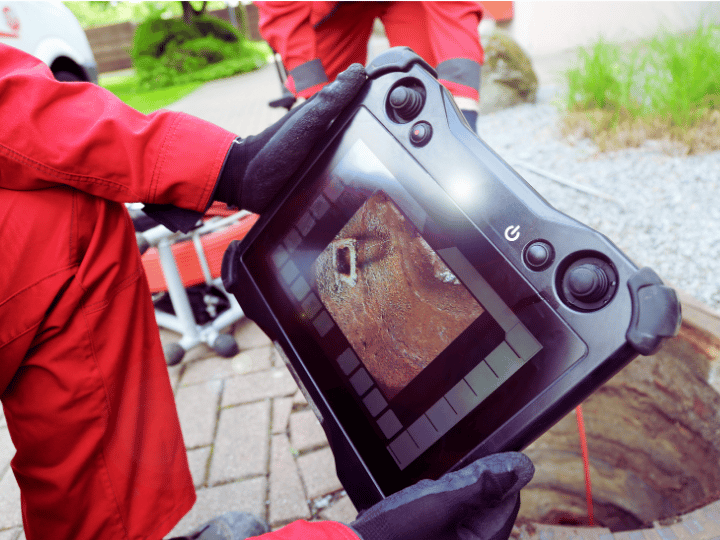
Ground movement also explains why some failures appear without an obvious cause. A homeowner with no large trees nearby may still develop a bellied or offset line simply because the ground shifted under a decades-old clay pipe. A camera inspection reveals this kind of damage clearly, showing the standing water in a bellied section or the misalignment at an offset joint, which points the sewer line repair in Sherman Oaks toward correcting the specific structural problem. Seeing the damage is what distinguishes a movement-related failure from a root or age problem, and it guides the fix.


Because the causes differ, the repairs differ, and a good plumber matches one to the other. Age-related deterioration and root-cracked joints in a pipe that still holds its shape are often ideal for trenchless pipe lining, which seals the cracks and joints from the inside without excavation. A fully collapsed section, severe offset, or a pipe that has lost its shape from ground movement may require targeted excavation to replace that section. The camera inspection is what identifies the cause and therefore the right sewer line repair in Sherman Oaks, so the homeowner is not sold a method that does not fit the failure.
This is why diagnosis comes before any recommendation. Two homes with the same symptom, a slow, backing-up drain, can have entirely different causes and need entirely different repairs. The one with a root-cracked joint might be a candidate for lining; the one with a collapsed section needs excavation. Honest sewer line repair in Sherman Oaks reads the cause first, then recommends the fix, rather than applying a single approach to every line.
Sewer repair is work where local licensing and experience directly affect the outcome. A licensed contractor is accountable to the state, handles the LADBS Van Nuys permit correctly, and does the work to code, which protects the homeowner and matters for LA County Sanitation compliance at a future sale. Beyond the license, a plumber who knows the Sherman Oaks clay-tile stock, the root corridors, and the local soil reads the cause of a failure quickly and recommends the fitting repair. That combination of accountability and local knowledge is what a homeowner should look for in sewer line repair in Sherman Oaks.
Transparency completes the picture. Because the cause and the right repair vary, the homeowner deserves to see the camera evidence, understand why a given method is recommended, and get the price in writing before agreeing. A plumber who explains the failure and the fix plainly, with upfront pricing, turns a buried and stressful problem into a clear decision.

In practice, a failing Sherman Oaks lateral rarely fails from a single cause; the three work together. Age makes a clay pipe brittle and opens its joints, which gives roots a way in, and root intrusion widens the openings further while ground movement adds stress that cracks the weakened pipe. A homeowner watching a line slowly decline is usually seeing all three at once: an old pipe that has cracked, roots exploiting the cracks, and soil movement worsening the damage over the seasons. Understanding that the causes reinforce each other explains why a lateral that seemed fine for decades can decline quickly once it starts, and why a repair that addresses only one factor, clearing the roots but not sealing the joint, tends not to hold. A lasting repair has to account for the combination, not just the most visible symptom.
This is also why two neighbors on the same street can have very different outcomes. One home with a large ficus directly over an old clay lateral may face aggressive root intrusion, while a neighbor with no large trees but expansive soil may develop an offset or bellied line from ground movement alone. The shared factor is the aging clay pipe; what varies is which additional cause dominates. A plumber who reads the specific combination at a given property, the tree canopy overhead, the soil, the pipe's age and material, arrives at a diagnosis that fits that home rather than a generic one. That property-specific read is what a camera inspection and local experience together provide.
Because these lines decline gradually, there is almost always a window to act before a full failure. A hairline crack that a camera catches early may be a candidate for trenchless lining, a contained repair; the same crack ignored widens as roots and movement work on it, progressing toward the collapse that forces an urgent excavation. The homeowners who fare best are the ones who take the early signs, an occasional gurgle, a slow drain, a faint odor, seriously enough to have the line inspected while a repair is still enough. Waiting until sewage backs up into the home converts a planned repair into an emergency, usually at higher cost and greater disruption.
Monitoring an aging but stable lateral is a reasonable middle path. If a camera inspection shows a clay line that is worn but not yet failing, a homeowner can keep an eye on it, clear it if roots become an issue, and plan a repair or replacement on their own timeline rather than being forced into one by a collapse. That kind of informed, unhurried planning is only possible when a homeowner knows the condition of the line, which is the case for having it inspected before there is a crisis. Knowing the pipe's state turns sewer line repair from an emergency into a decision.
ServiStar Plumbing and HVAC is a locally owned and operated, owner-led company with more than 30 years of industry experience, based at 13351 Riverside Drive Suite #414 in Sherman Oaks, 91423. Licensed, bonded, and insured under California CSLB License #885156, with a 4.8-star rating across 140+ Google reviews and upfront, transparent pricing with no hidden fees, the company diagnoses the cause by camera before recommending a repair. For a failing lateral anywhere from the 91423 flats to the streets south of Ventura Boulevard, a licensed Sherman Oaks plumber can identify why the line failed and fix it correctly. Call (818) 864-0117 to schedule an inspection.
Redirect to:
|
This page is a redirect. The following categories are used to track and monitor this redirect:
|