Why Solana Beach Homes Need Their Crawl Spaces Sealed
Solana Beach is a compact coastal community in San Diego County, bordered by lagoons, canyons, and the mild marine climate of the North County coast. That setting is pleasant for people and equally agreeable to the roof rat, which neither hibernates nor slows in a climate that stays temperate year-round. The nearby lagoons and canyons provide habitat and cover, and the older and varied housing stock of a beach town offers plenty of crawl spaces to shelter in, which is why crawl space rodent proofing in Solana Beach is a steady need rather than a seasonal one.
The coastal climate matters more than it first appears. In regions with hard winters, rodent activity falls off in the cold; on the San Diego coast it does not, because the marine-influenced climate stays mild through the year. Roof rats breed and forage in every season here, so the pressure on a crawl space is continuous, and a home left unsealed does not get the winter respite that colder climates provide. Sealing the crawl space is how a coastal homeowner closes the door on a problem that never takes a season off.
A mild coast means no winter rodent respite
Where hard winters cut rodent activity, the marine-influenced San Diego coast stays mild all year, so roof rats remain active and reproductive in every season. A coastal home does not get the winter lull that colder climates provide, which is why crawl space pressure there is continuous.
Lagoons and canyons supply coastal habitat
Solana Beach's lagoons and canyons provide water, cover, and habitat that sustain roof rats close to homes year-round. The vegetation of an established coastal neighborhood adds food and travel routes, keeping a steady population pressing against the crawl spaces along the open space.
Salt air corrodes ordinary seals
Coastal salt air corrodes metal over time, degrading vent screens and fasteners and reopening entries an older seal once closed. This is why durable coastal rodent proofing favors corrosion-resistant copper and stainless materials that withstand the salt air as well as a rodent's teeth.
Why the coast keeps roof rats active
The roof rat, Rattus rattus, dominates the Southern California coast, and the climate suits it exactly. Mild, marine-influenced weather means no killing cold to thin the population, so roof rats remain active and reproductive throughout the year. Solana Beach's lagoons, the San Elijo and nearby wetlands, and its canyons provide water, cover, and habitat, and the vegetation of an established coastal neighborhood gives the rats food and travel routes. The population is sustained year-round, and the homes along it are the sheltered edge of that habitat.
Because the roof rat is an agile climber, it enters homes at any height, reaching elevated vents and roof lines as readily as low foundation gaps. The crawl space serves as both harborage and a route into the wall cavities that lead upward, so it is central to how the animal uses a house. A coastal home's crawl space, warm and dry against the marine damp outside, is an attractive refuge, and sealing it is a key part of excluding a rat that moves comfortably from the ground to the roof.
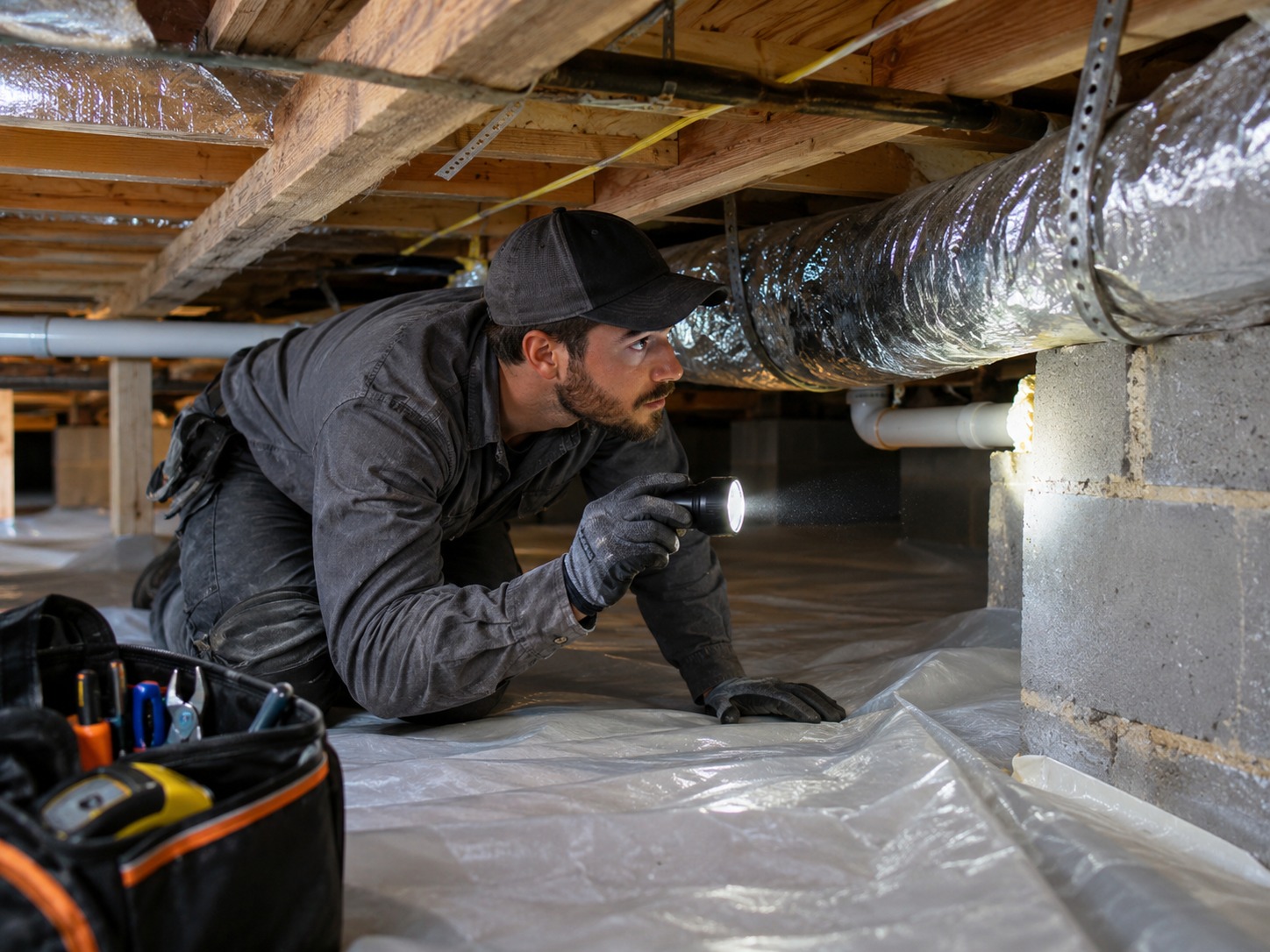
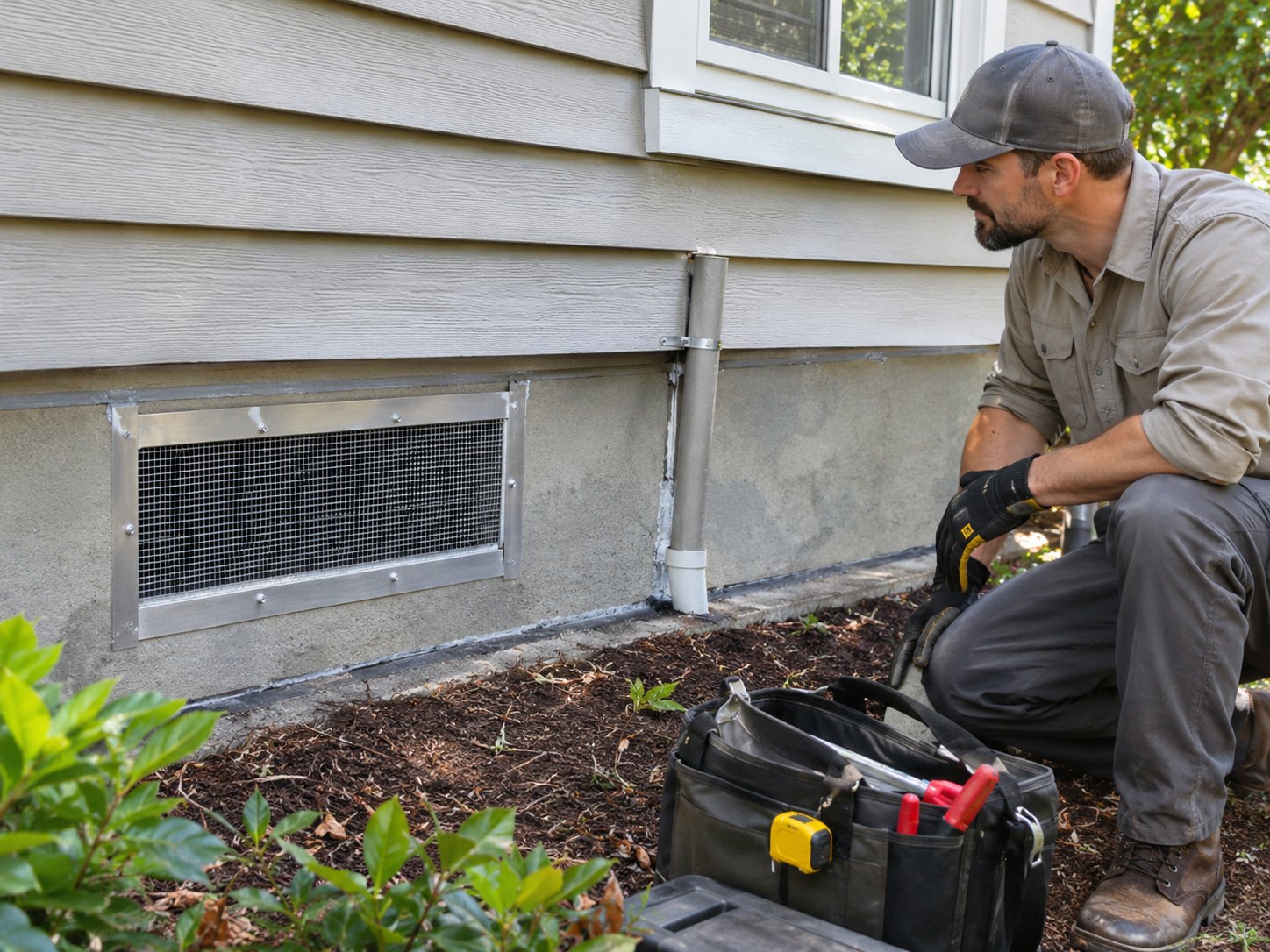
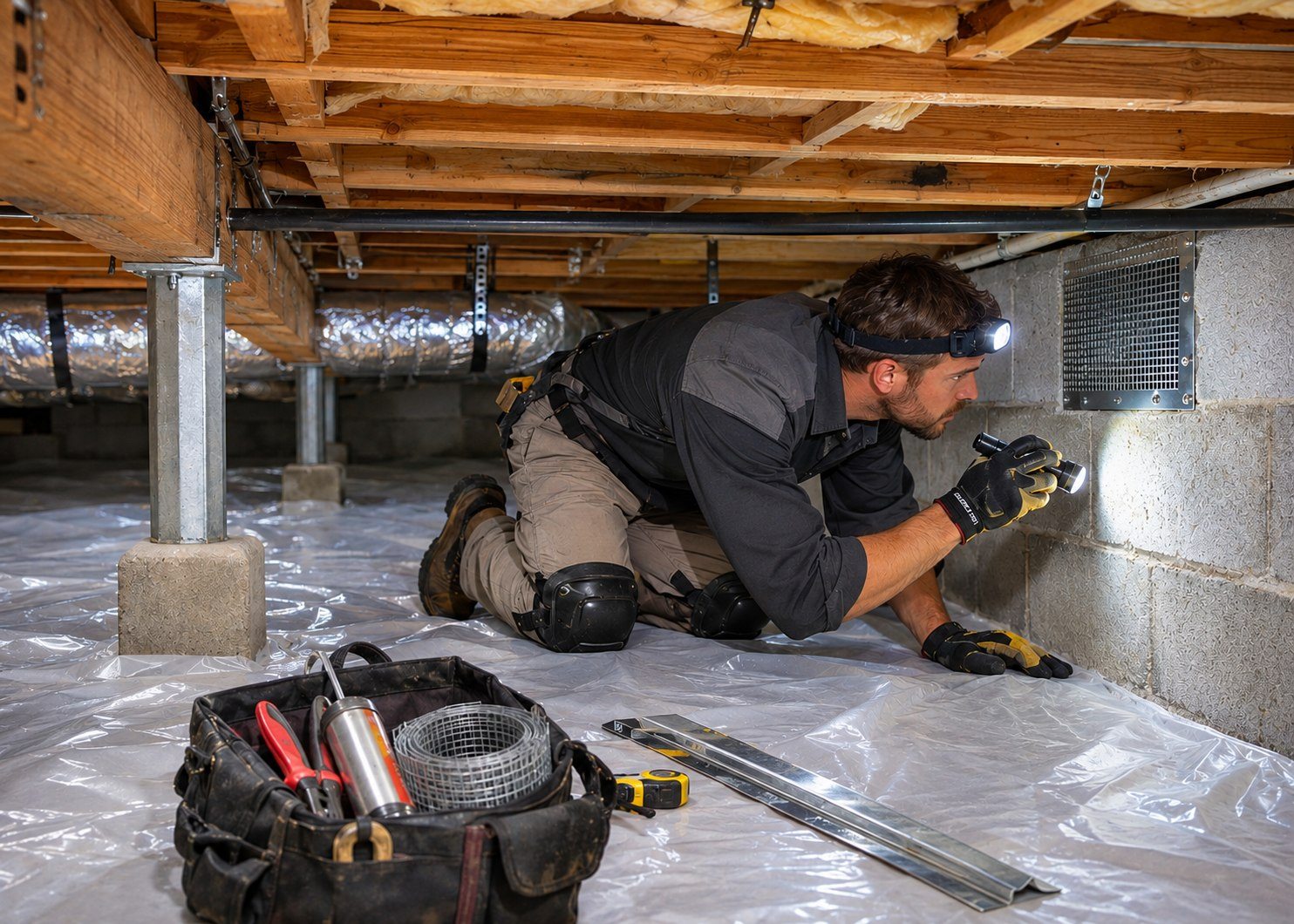
A crawl space rodent proofing in Solana Beach begins with a full inspection of the foundation perimeter. The entries are the usual ones, foundation vents with failed screens, gaps around pipe and conduit penetrations, the crawl space access hatch, and sill-plate gaps, and the varied housing stock of a beach town, from older cottages to rebuilt modern homes, presents them in different combinations. Coastal homes also contend with salt air that corrodes metal over time, so vent screens and fasteners degrade, which quietly opens entries an older seal once closed.
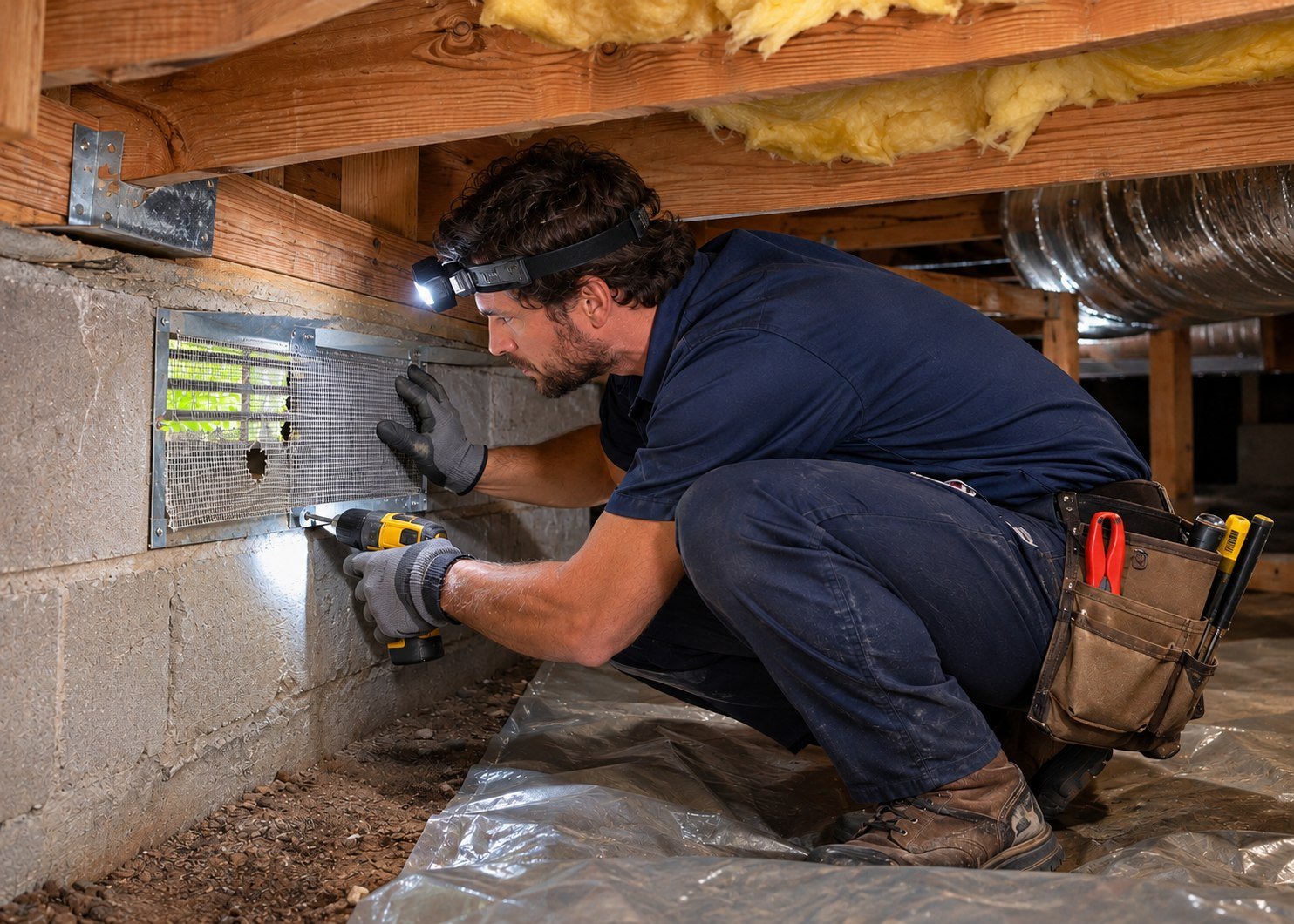
Completeness is what holds a coastal home, because the year-round population tests the foundation continuously. Every vent screened in galvanized steel, every penetration packed with copper or stainless, every gap closed with the right material, is what keeps the roof rats out, and leaving one opening simply directs them to it. The salt-air factor argues for corrosion-resistant materials, since a seal that rusts away in the coastal air is a temporary one, and proper exclusion accounts for the environment it has to survive in.
Materials that last in the coastal air
Exclusion depends on materials a rodent cannot chew, and on the coast those materials also have to resist corrosion. Galvanized steel hardware cloth covers vents and gaps, metal flashing closes edges, copper mesh or stainless steel packs pipe penetrations, and mortar seals masonry breaks. Copper and stainless are well suited to the salt air, holding up where plain steel would eventually rust. The materials that fail everywhere, expanding foam, caulk, plastic, and wood, fail on the coast too, because rodents gnaw them, so a Solana Beach crawl space has to be sealed in durable metal to stay sealed.
A homeowner weighing crawl space rodent proofing in Solana Beach should confirm both that each opening is closed with metal and that the metal suits the coastal environment, because the combination of year-round rodent pressure and corrosive salt air is harder on a seal than an inland setting. Proper materials, resistant to both teeth and salt, are what make a coastal seal last.
Damage, cleanup, and the right sequence
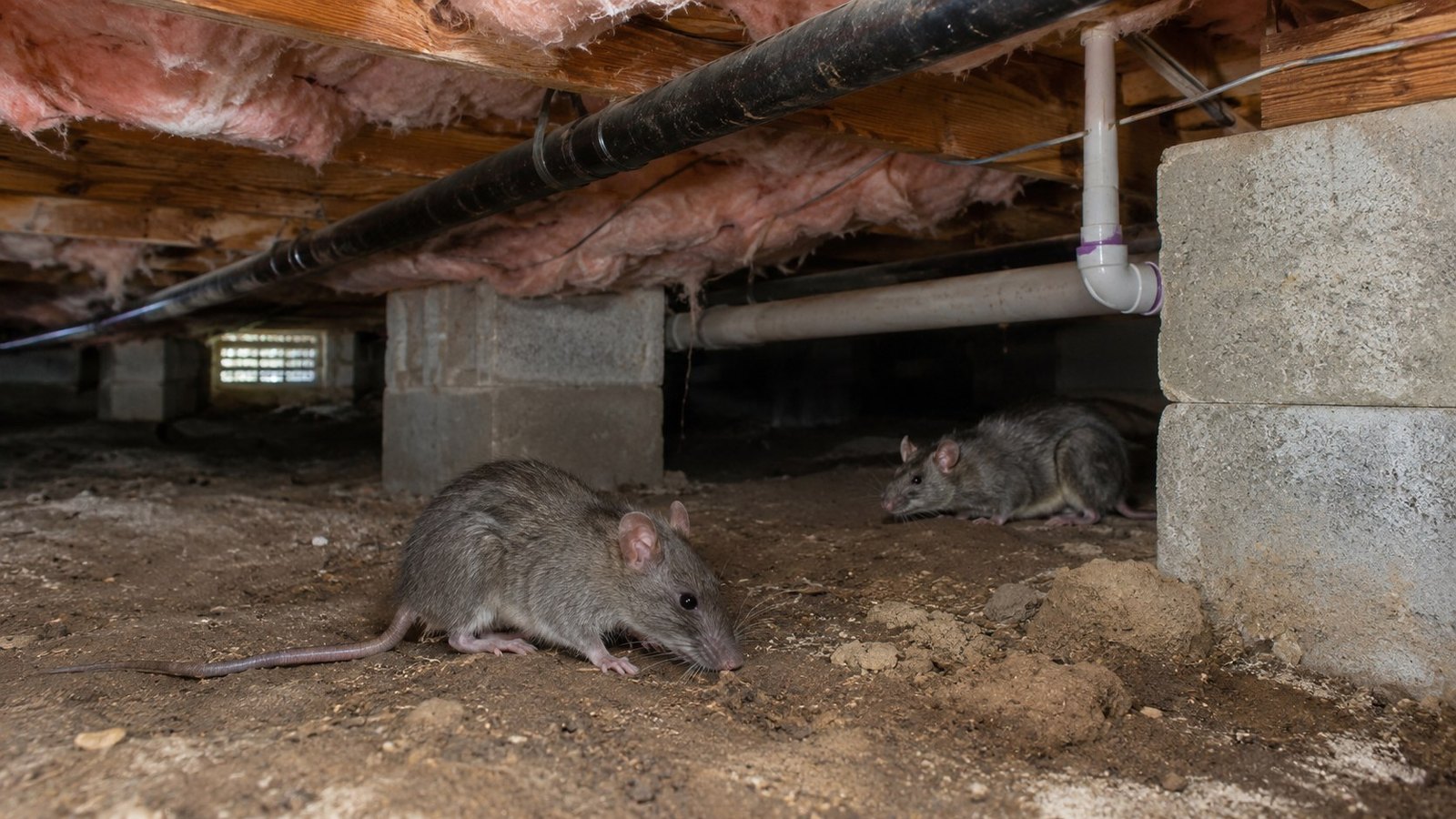
Roof rats in a Solana Beach crawl space cause the familiar harm. They nest in and ruin subfloor insulation, gnaw wiring in a way that raises fire risk, and tear open HVAC ducts, wasting energy and drawing crawl-space air into the home. Their droppings and urine create odor and contamination. With the coastal population active year-round, an unsealed home tends to see the problem recur in every season, which is the clearest reason to seal the crawl space rather than clean it repeatedly.
Cleanup is a controlled process, because rodent droppings and urine can carry pathogens. Dried droppings are not swept or vacuumed, which would release particles into the air; they are dampened with disinfectant and removed with protective equipment and ventilation, and contaminated insulation is replaced rather than cleaned in place. This restores the crawl space, and sealing keeps the coast's year-round rats from moving back in.
Sealing for a year-round, coastal rat
The defining fact of rodent proofing on the Solana Beach coast is that the roof rat never gets an off-season, so the seal has to hold year-round rather than through a single bad stretch. In a climate that stays mild, the population remains active and reproductive every month, and an unsealed home is colonized and recolonized without pause. A crawl space rodent proofing in Solana Beach is therefore built for continuous pressure, which raises the high-grade on both completeness and durability of materials.
Because the roof rat climbs, the crawl space seal is part of excluding an animal that enters at any height, so a complete job considers the elevated openings as well as the foundation. Within the crawl space, every vent is screened in steel, every penetration packed, the hatch fitted, and the gaps closed, across the whole perimeter, since the year-round population tests the foundation continuously and finds any opening left behind.
The coastal environment adds the salt-air factor, which quietly degrades ordinary metal over time. Vent screens and fasteners corrode, reopening entries a previous seal once closed, so a Solana Beach seal favors corrosion-resistant copper and stainless where it can, materials that resist both the rat's teeth and the salt air. A crawl space rodent proofing in Solana Beach that accounts for the environment lasts; one that uses materials the salt air defeats becomes a temporary measure.
Roof rats in a coastal crawl space cause the familiar harm: fouled subfloor insulation, gnawed wiring that raises a fire risk, and torn HVAC ducts that waste energy and draw crawl-space air into the home. Their droppings and urine create odor and contamination. With the population active in every season, an unsealed Solana Beach home sees the damage recur year-round, which is the strongest case for sealing the crawl space rather than cleaning it repeatedly.
Cleanup follows the controlled process for rodent contamination: dried droppings dampened rather than swept or vacuumed, fouled insulation removed and replaced, and the space sanitized under protective equipment and ventilation. Fresh insulation after sealing restores the crawl space and the home's efficiency, and the corrosion-resistant seal keeps the coast's year-round rats from moving back in.
For a Solana Beach homeowner, the combination that works is a complete, corrosion-resistant crawl space seal, understood as part of a whole-house exclusion against a climbing rat, paired with removal of any animals present and a careful cleanup and restoration. That is what holds a coastal home against a roof-rat population the mild climate keeps active in every month of the year.
Unlike inland areas, coastal Solana Beach offers little seasonal relief, because the mild climate keeps roof rats active year-round, but there is still a modest cool-season push toward the warmth of homes. The practical implication is that sealing should not wait for a seasonal lull that never fully arrives; closing the crawl space whenever the need is identified is the right move, since the coastal population will test the foundation in every month regardless of the calendar.
A sealed crawl space improves the home's efficiency as well. The gaps that admit roof rats leak conditioned air, so closing the foundation and restoring the insulation steadies the floors and eases heating and cooling against the marine climate. A crawl space rodent proofing in Solana Beach that closes the openings properly returns comfort and efficiency along with rodent control, adding value beyond keeping the animals out of a coastal home.
Maintenance is especially important in the salt air. Coastal corrosion works steadily on metal, so even a sound seal should be checked periodically, with corroded vent screens or fasteners replaced before they reopen an entry. A homeowner who maintains the exclusion in a coastal environment holds the home against a roof-rat population that stays active all year, rather than letting the salt air quietly undo the seal over time.
On the coast, the questions that mark a quality job include the environment itself. Will each opening be closed in metal that resists both a rat's teeth and the salt air, favoring copper and stainless where it counts? Will the whole perimeter be sealed, and the elevated entries a climber uses be considered? Will the animals present be removed first and the contamination cleaned properly? Clear answers suit a Solana Beach home facing a year-round population and a corrosive coastal environment together.
Done with the coast in mind, the crawl space seal holds a Solana Beach home against a roof-rat population the mild climate never thins. A complete, corrosion-resistant exclusion, understood as part of a whole-house seal against a climber, paired with removal and a careful cleanup, closes the building against the lagoon-and-canyon habitat at its edge. For a coastal homeowner, materials chosen for both teeth and salt are what keep the seal a permanent fix rather than a seasonal one.
The health dimension gives the work weight beyond the structural damage. Rodent droppings and urine in a crawl space do not stay below the floor, because a house draws air upward and pulls crawl-space air into the living space through gaps and ductwork. Clearing the contamination under the controlled process and sealing the space protects the household's air, so a crawl space rodent proofing in Solana Beach is as much about what the family breathes as about the roof rats and the damage they cause in a space no one sees.
In the end, a coastal home in Solana Beach can enjoy its lagoon-and-canyon setting only by being sealed against the year-round rat population that setting sustains. The coast and its mild climate are the reason people live there, and a complete, corrosion-resistant crawl space seal is what lets a homeowner keep that setting without the house serving as shelter for a population the weather never thins across the seasons.
Sealing a building and removing animals are different trades, and a coastal homeowner usually needs both. Exclusion and cleanup, the work of a contractor such as the team behind https://www.atticguardca.com/areas-we-serve/solana-beach/, closes the crawl space and clears the contamination, while trapping the rodents already present is pest control, done first so the cleared space stays clear. For a Solana Beach home at the edge of lagoon and canyon habitat in a climate that keeps rats active all year, that combination, done thoroughly in corrosion-resistant metal, is what finally seals a crawl space against a coastal rodent problem that otherwise never pauses.
Solana Beach (Solana, Spanish for "sunny side") is a beach city in San Diego County, California, on the South Coast. Its population was at 12,940 at the 2020 U.S. census, up from 12,867 at the 2010 census.[5]
The area was first settled by Indigenous people of the San Dieguito complex, early Holocene inhabitants of the area. The area was later inhabited by the Kumeyaay, who set up a village they called Kulaumai, on the southern banks of San Elijo Lagoon.[6][7] During the Spanish colonial era, trails heading north near Solana Beach crossed inland to avoid the marshes and inlets of the area.
The George H. Jones family were the first European settlers in the area, arriving in 1886. Until 1923, the area had been called Lockwood Mesa. When Lake Hodges Dam was built in 1917–1918, the area began to develop rapidly. The creation of the 12,000-acre (49 km2) Santa Fe Irrigation District in 1918 ensured that the area from Rancho Santa Fe through Solana Beach would prosper and expand. The coastline from Solana Beach to Oceanside began to boom in the early 1920s. In 1922 Colonel Ed Fletcher, an early community leader and developer, purchased 140 acres (0.57 km2) at $20 per acre from farmer George H. Jones to develop the town of Solana Beach, with the help of his brother-in-law Eugene Batchelder. To provide access to the beach for the development, hydraulic water pressure was used to erode away tons of earth and create the Fletcher Cove entry and beach. This took one man three months with a fire hose, using water that was coming over the spillway at Lake Hodges Dam. The beach was opened with great fanfare including horse races on the beach on July 4, 1925.[8]
The community grew slowly, but steadily throughout the rest of the century, with particular booms occurring in the decade after World War II and a real estate boom in the last quarter of the 20th century. In 1986 the community incorporated as the city of Solana Beach.[9] That year, the city hosted the funeral services for Desi Arnaz, who had died in Del Mar. Arnaz's funeral was held at St. James Roman Catholic Church, part of the Diocese of San Diego.[10][11]
The city received national news coverage in 2003 upon becoming the first city in the continental United States to enact a smoking ban on its public beaches, a trend which has continued as many other coastal California towns have followed suit in banning smoking on their beaches. Solana Beach was the last coastal community in North San Diego County to ban alcohol on the beach, doing so for at least a year in an action unanimously approved by the City Council.[citation needed]
On April 25, 2008, retired veterinarian and 38-year resident Dr. David Martin, 66 years old, suffered a fatal injury from an extremely rare great white shark bite while swimming with a group approximately 150 yards (140 m) off shore near Solana Beach's Fletcher Cove.[12] The group of swimmers reportedly began their swim at Tide Beach Park to the north. Surfers in the area of Fletcher Cover noted harbor seals in the water and a wounded seal on the beach at Fletcher Cove just before the attack, the latter being a typical sign of sharks feeding in the area. Recent increases in the seal population along the Southern California coast — and the seals' tendency to swim in close proximity to human swimmers — are suspected to be contributing factors in the attack.[13]
The neighborhood of La Colonia de Eden Gardens, also known as La Colonia and Eden Gardens, is one of the oldest residential areas of Solana Beach. The community was formed in the 1920s by Mexican farmers who were hired by the owners of large ranches in adjacent Rancho Santa Fe. These farmers wanted their families nearby, hence the formation of La Colonia (the colony). The name Eden Gardens came later from a land developer as a marketing tool. Many residents still refer to the area as La Colonia. Famous residents include Chicano rapper Lil Rob, who was born and raised in the community.
Before the city incorporated, the county allowed highly concentrated development of large condominiums atop the sandstone bluffs. Geologists studying erosion in period between 1947 and 1977 found little change in the face of the bluffs. It turned out this was a time of very few storms with very little erosion along the coast. The city has had to deal with bluffs collapsing onto the beach and damaging the improvements above. Owners threatened by wave and storm damage to the cliffs have few options.[14]
The Pacific Ocean is to the west; the community of Cardiff-by-the-Sea to the north, and the City of Del Mar to the south. The unincorporated village of Rancho Santa Fe is located on the east side.
According to the United States Census Bureau, the city has a total area of 3.5 square miles (9.1 km2). 3.4 square miles (8.8 km2) of it is land and 0.1 square miles (0.26 km2) of it (2.96%) is water.[3]
Solana Beach city, California – Racial and ethnic composition Note: the US Census treats Hispanic/Latino as an ethnic category. This table excludes Latinos from the racial categories and assigns them to a separate category. Hispanics/Latinos may be of any race.
The whole population lived in households. There were 5,646 households, of which 24.6% had children under the age of 18 living in them. Of all households, 48.4% were married-couple households, 7.1% were cohabiting couple households, 27.4% had a female householder with no spouse or partner present, and 17.1% had a male householder with no spouse or partner present. About 30.0% of households were one person, and 13.4% were one person aged 65 or older. The average household size was 2.29. There were 3,450 families (61.1% of all households).[37]
The age distribution was 17.9% under the age of 18, 6.7% aged 18 to 24, 22.5% aged 25 to 44, 29.3% aged 45 to 64, and 23.6% who were 65years of age or older. The median age was 47.2years. For every 100 females, there were 93.3 males, and for every 100 females age 18 and over there were 90.2 males.[37]
There were 6,574 housing units at an average density of 1,925.6 units per square mile (743.5 units/km2), of which 5,646 (85.9%) were occupied. Of the occupied units, 62.5% were owner-occupied and 37.5% were occupied by renters. Of all housing units, 14.1% were vacant, with a homeowner vacancy rate of 1.0% and a rental vacancy rate of 7.8%.[37][38]
100.0% of residents lived in urban areas, while 0.0% lived in rural areas.[39]
In 2023, the US Census Bureau estimated that the median household income was $150,820, and the per capita income was $93,265. About 2.5% of families and 5.5% of the population were below the poverty line.[40]
At the 2010 census Solana Beach had a population of 12,867. The population density was 3,550.7 inhabitants per square mile (1,370.9/km2). The racial makeup of Solana Beach was 11,039 (85.8%) White, 60 (0.5%) African American, 62 (0.5%) Native American, 513 (4.0%) Asian, 19 (0.1%) Pacific Islander, 738 (5.7%) from other races, and 436 (3.4%) from two or more races. Hispanic or Latino of any race were 2,048 persons (15.9%).[41]
The whole population lived in households, no one lived in non-institutionalized group quarters and no one was institutionalized.
There were 5,650 households, 1,323 (23.4%) had children under the age of 18 living in them, 2,730 (48.3%) were opposite-sex married couples living together, 360 (6.4%) had a female householder with no husband present, 193 (3.4%) had a male householder with no wife present. There were 325 (5.8%) unmarried opposite-sex partnerships, and 42 (0.7%) same-sex married couples or partnerships. 1,745 households (30.9%) were one person and 647 (11.5%) had someone living alone who was 65 or older. The average household size was 2.28. There were 3,283 families (58.1% of households); the average family size was 2.85.
The age distribution was 2,378 people (18.5%) under the age of 18, 738 people (5.7%) aged 18 to 24, 3,518 people (27.3%) aged 25 to 44, 3,829 people (29.8%) aged 45 to 64, and 2,404 people (18.7%) who were 65 or older. The median age was 43.7 years. For every 100 females, there were 97.5 males. For every 100 females age 18 and over, there were 95.3 males.
There were 6,540 housing units at an average density of 1,804.7 per square mile, of the occupied units 3,401 (60.2%) were owner-occupied and 2,249 (39.8%) were rented. The homeowner vacancy rate was 1.4%; the rental vacancy rate was 6.3%. 7,919 people (61.5% of the population) lived in owner-occupied housing units and 4,948 people (38.5%) lived in rental housing units.
The Cedros Design District is located in Solana Beach, and consists of more than 85 art galleries, import and antique stores, boutiques and cafes.[42][43] The Design District is also home to the Solana Beach Farmers Market, which operates every Sunday from 12pm to 4pm[44] and offers locally grown fresh cut flowers, baked goods, organic produce and veggies.[45] Another prominent venue on Cedros Avenue is the Belly Up, a live music space operating since 1974.[46]
The headquarters of Nisus Software, developers of the Nisus Writer word processor for the Apple Macintosh, are located in Solana Beach.[47]
The city has hosted a free annual community event, Fiesta Del Sol, for the past 40+ years.[48] The festival is a two day event filled with activities for children, food, and performances from over a dozen local entertainers. The festival includes interactive games, rides, and entertainment.[49]
Solana Beach hosts a free annual summer concert series known as "Concerts at the Cove," held at Fletcher Cove Park.[50]
Solana Beach operates a Junior Lifeguard Program offering an ocean safety curriculum that includes beach and ocean safety, CPR, and first aid training..[51]
Solana Beach is a general-law city operating under a Council-Manager form of government. The City Council serves as a legislative body and consists of five Council members, one of whom is chosen to act as Mayor for a one-year term on a rotating basis.[52]
Why are roof rats active year-round in Solana Beach?
Most abrupt failures come from electrical parts like a failed capacitor or contactor, a refrigerant leak that drops the charge, a stuck reversing valve that flips heating and cooling, or a bad thermostat. A tripped breaker that keeps tripping points to a deeper electrical fault. Green Planet HVAC tests these in order to find the real cause rather than guessing at the first likely part.
Does salt air affect crawl space sealing on the coast?
Usually yes. The parts that fail most often are in the outdoor condenser or at the air handler, not behind the plaster and molding of the living spaces, so a typical repair happens at the equipment rather than in the finished rooms. When interior access is needed, the work is done carefully and kept small. That matters in a San Marino home where the interior is worth protecting.
What makes a coastal crawl space seal last?
Repeated breakdowns are a signal. A newer system with a single failed part is a clear repair, but an aging unit with frequent failures or a major component like the compressor going out usually costs more to keep patching than to replace. Green Planet HVAC lays out the age, the repair history, and the numbers so the choice is clear, and a call starts at (818) 450-5667.